Copper peptide serum delivery of GHK-Cu
The serum question begins before a wrinkle changes: what arrives in the tissue, in which form, and how was it measured?
Hostynek’s skin samples
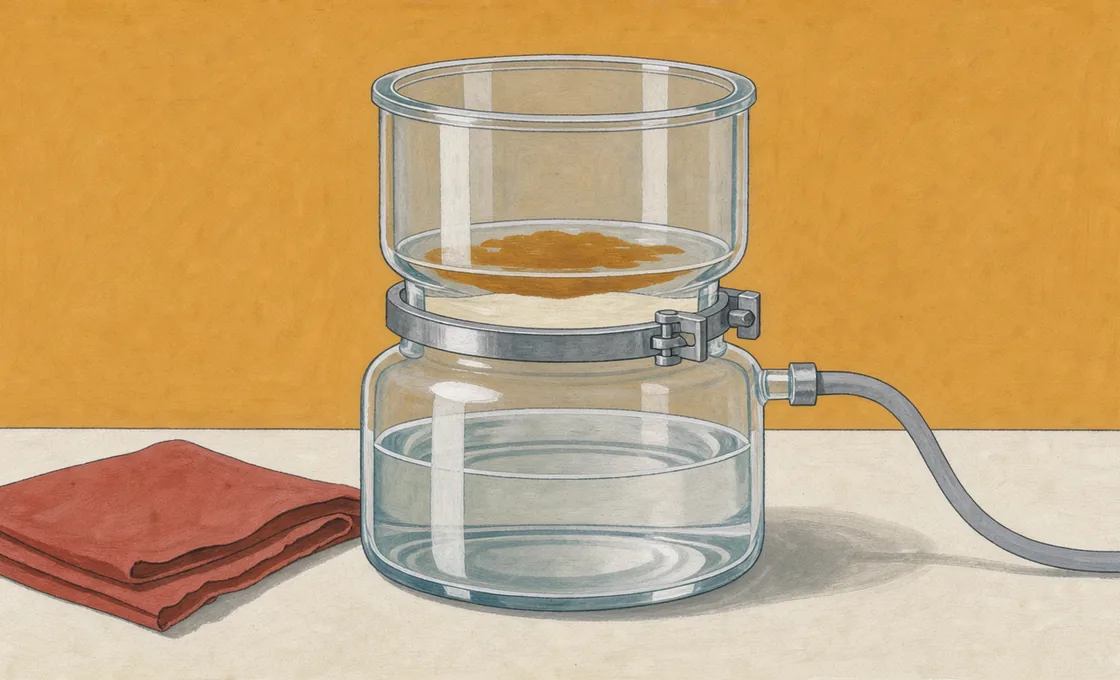
Hostynek and colleagues applied a copper tripeptide to removed human skin and measured copper passage and retention. Over 48 hours, 136.2 ± 17.5 µg/cm² permeated the dermatomed skin and 97 ± 6.6 µg/cm² remained as a dermal depot. A depot is material retained locally in tissue.
The measurement is copper. I hesitate whenever that noun quietly expands into a claim about intact peptide, improved wrinkles or exposure throughout a living person. This was a laboratory skin experiment, with a result about passage and retention under its test conditions.
For the safety file, the useful next question concerns local exposure. For a cosmetic outcome, the next question concerns what happened to the skin. Those questions call for additional measurements beyond the amount retained.
The lipid-carrier experiment
The 2023 liposome work used carriers about 100 nm across. The reported encapsulation efficiencies were 31.7% for anionic liposomes and 20.0% for cationic liposomes. The preparations remained stable for four weeks at room temperature and produced 48.9% elastase inhibition in human epidermal cells, with no cytotoxicity.
The attention to the carrier earns my respect. A useful ingredient still needs a preparation that holds together. Stability and cell survival establish points in its favour; human skin tolerance remains a separate part of development.
Acid-sensitive preparations
The formulation literature describes poor passage through the stratum corneum, skin's outer barrier, as a central difficulty for native GHK. Liposomes, lipid modifications and other carriers are attempts to address that difficulty.
Copper binding also depends on the surroundings. The skin-regeneration review places favourable stability near pH 5 to 6.5 at a 1:1 copper-to-peptide ratio. Acidic ascorbic acid below about pH 3.5 can disrupt the complex, and other low-pH actives can compete for copper. That is a formulation problem with possible consequences for activity. It cannot identify the cause of a particular person's irritation.
Topical and injectable comparisons
The human skin-repair evidence is predominantly topical. The rat plasma experiment concerns intravenously administered free GHK and its breakdown, whereas the skin-chamber study concerns locally retained copper. A direct, validated human comparison of topical and injectable GHK-Cu remains missing.
I cannot turn better delivery into an automatic safety advantage. The preparation, route and resulting exposure all need to accompany the result. The half-life discussion deals with the blood question; the skin trials deal with appearance.